
Cap Orne
Still going, still swearing.....

Caen slipped behind me in church bells and drizzle, and I felt oddly relieved to be moving on. I can’t quite explain why. It’s a handsome city, young and lively and must be a great place to live. Perhaps it was just the weather, or the weight of leaving, or simply that I wanted the rhythm of the trail back under my feet.
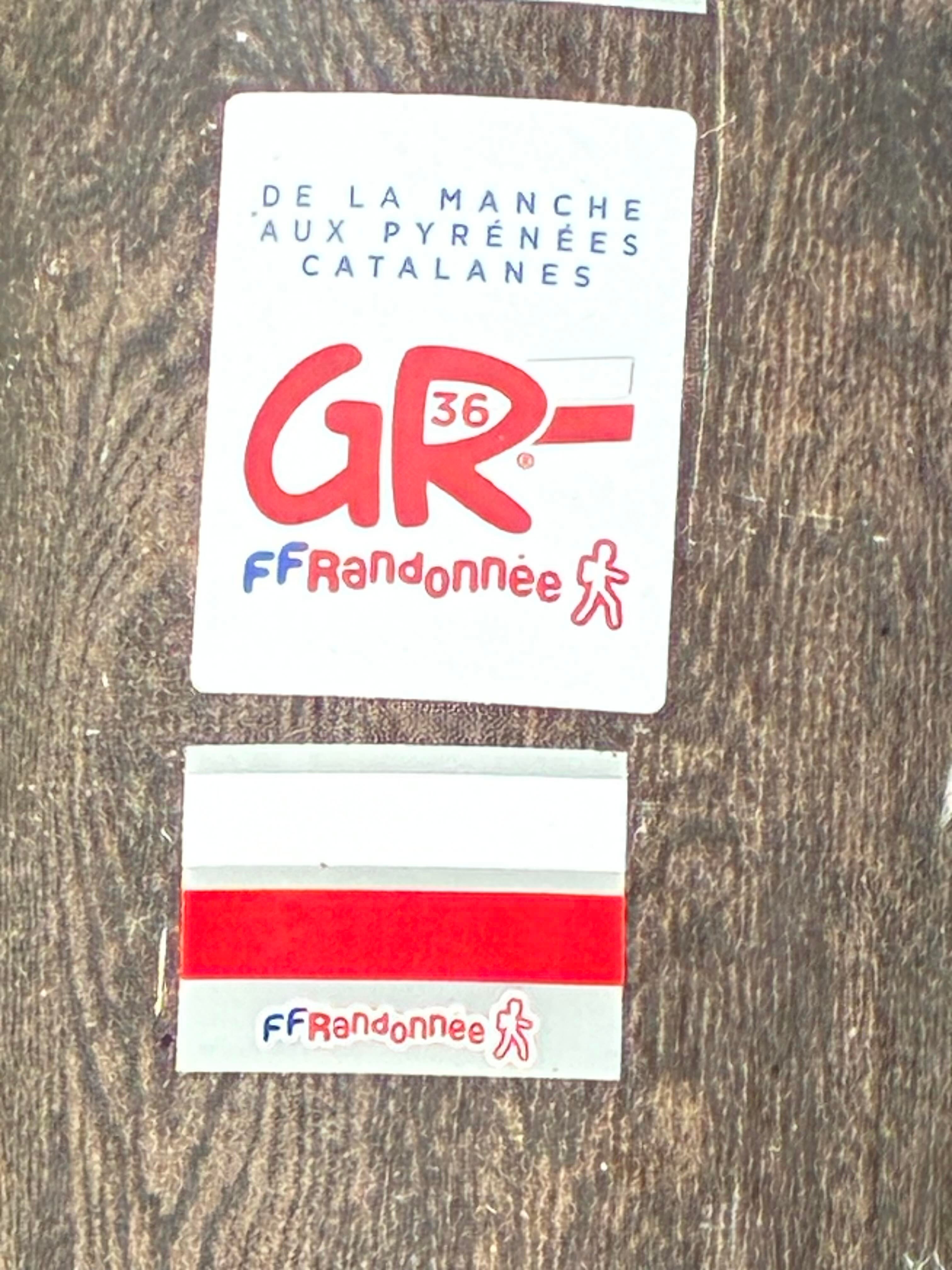
The first few kilometres were the usual trudge of roads, pavements and cycle paths. But little by little, your muscles remember, your stride lengthens, your rhythm returns. I’m on the GR36 now, a trail that runs from the Channel coast at Ouistreham to the Pyrenees near Andorra. It’s the perfect companion southwards, at least for this stage. Later it plunges into the flat monotony of central France, but that’s a problem for another day. For now it’s simple: follow the friendly red-and-white flashes and keep going.
What struck me most was how quickly the city fell away. Suddenly I was walking along the Orne, the river that cradles Caen, shadowing its lazy bends. Here, the ruin of a tannery, there an ancient quarry, mostly MAMILS racing along with time on their hands and the French state funding their generous retirement, lol.
I’m aiming for Mutrécy, where I hope to find water and a good pitch. Soon the landscape tipped upwards and I was back in my least favourite terrain: open, windy fields, climbing steadily. These are the moments when I catch myself asking, not entirely joking, what the fuck I’m doing here.
Mutrécy arrived and delivered. The cemetery tap gushed obligingly and the map promised a descent to the river with open ground. In reality the path was hemmed by scrub. Darkness fell, and as I began to feel uneasy the river widened and I heard voices: two fishermen swishing their rods into the still water. A chapel was signposted nearby, with picnic tables on flat grass. Not my ideal wild camp, so close to the path, but it would do.
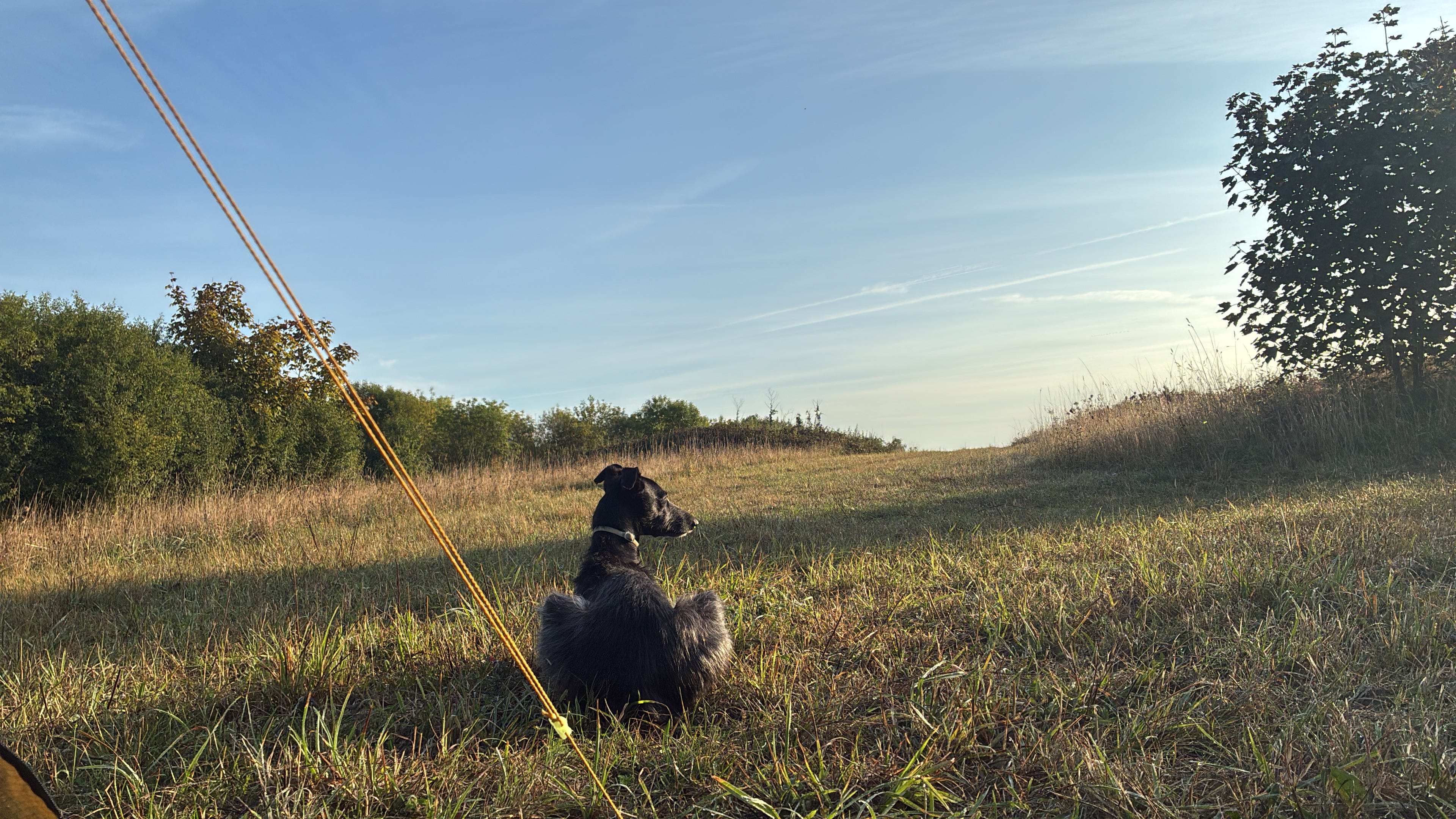
And what a spot it turned out to be. Across the water, cows grazed at dusk, wading until they looked like children splashing in the shallows. A black cormorant perched on a rock, as if it had flown in from the sea and forgotten to leave. The fishermen vanished, the runners stopped passing, and one last headlamp swept across my tent. Then came the animal cries. I’d been told otters lived here. Perhaps. Later there were stranger calls, which I can only imagine were badgers. I was unsettled, but Youna snoozed unbothered, and I took my cue from her. By morning all was calm, the tent dry, and I knew I’d stumbled on one of the best wild pitches yet.
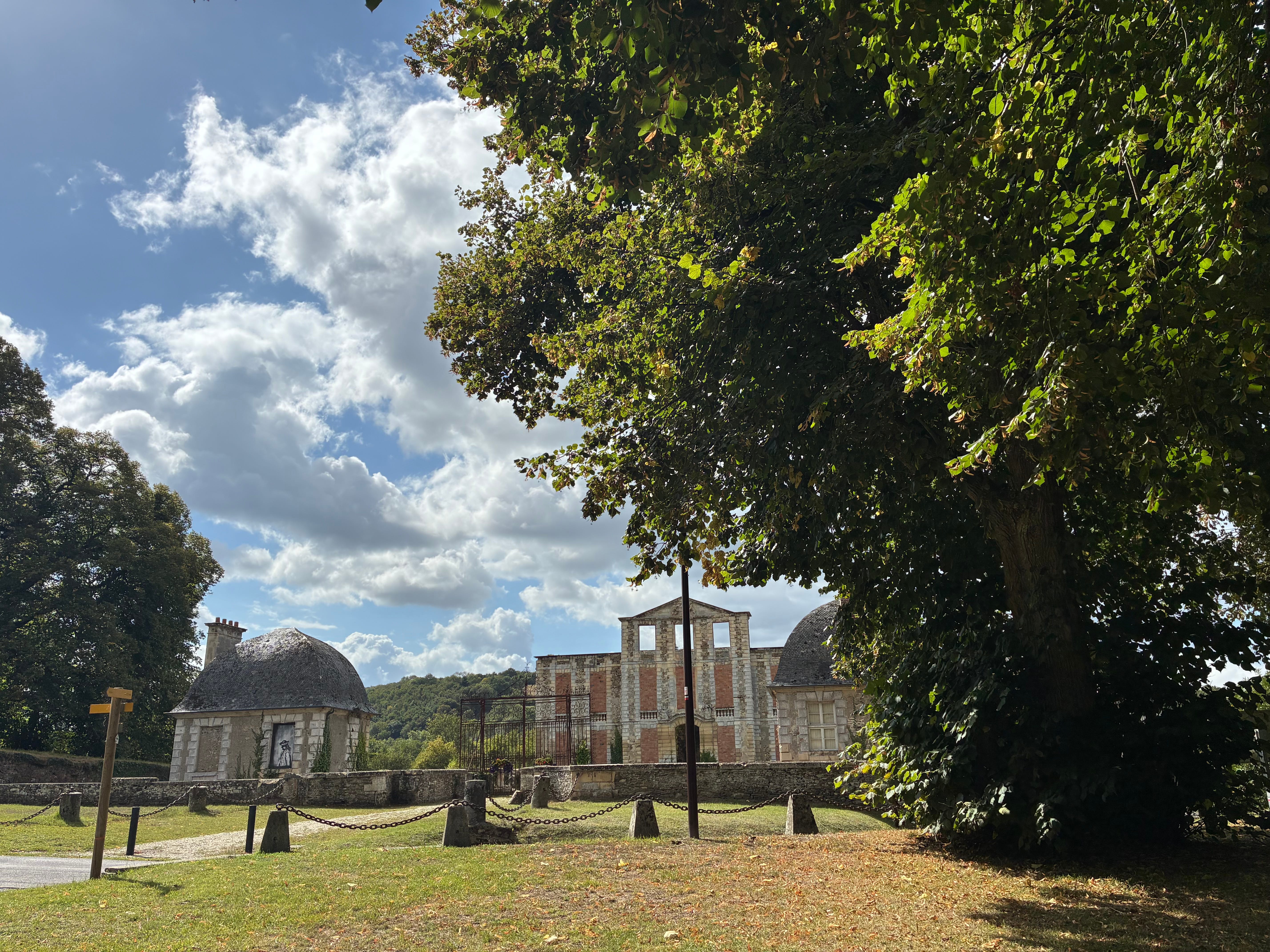
The next day I aimed for another wild camp, avoiding a poorly reviewed site. On the way I passed the ruins of a château, a skeleton of stone. During the war it had been held by the same German regiment that massacred the village of Oradour-sur-Glane. When the British forced them out they torched the château, together with its library, furniture and paintings. Nice.
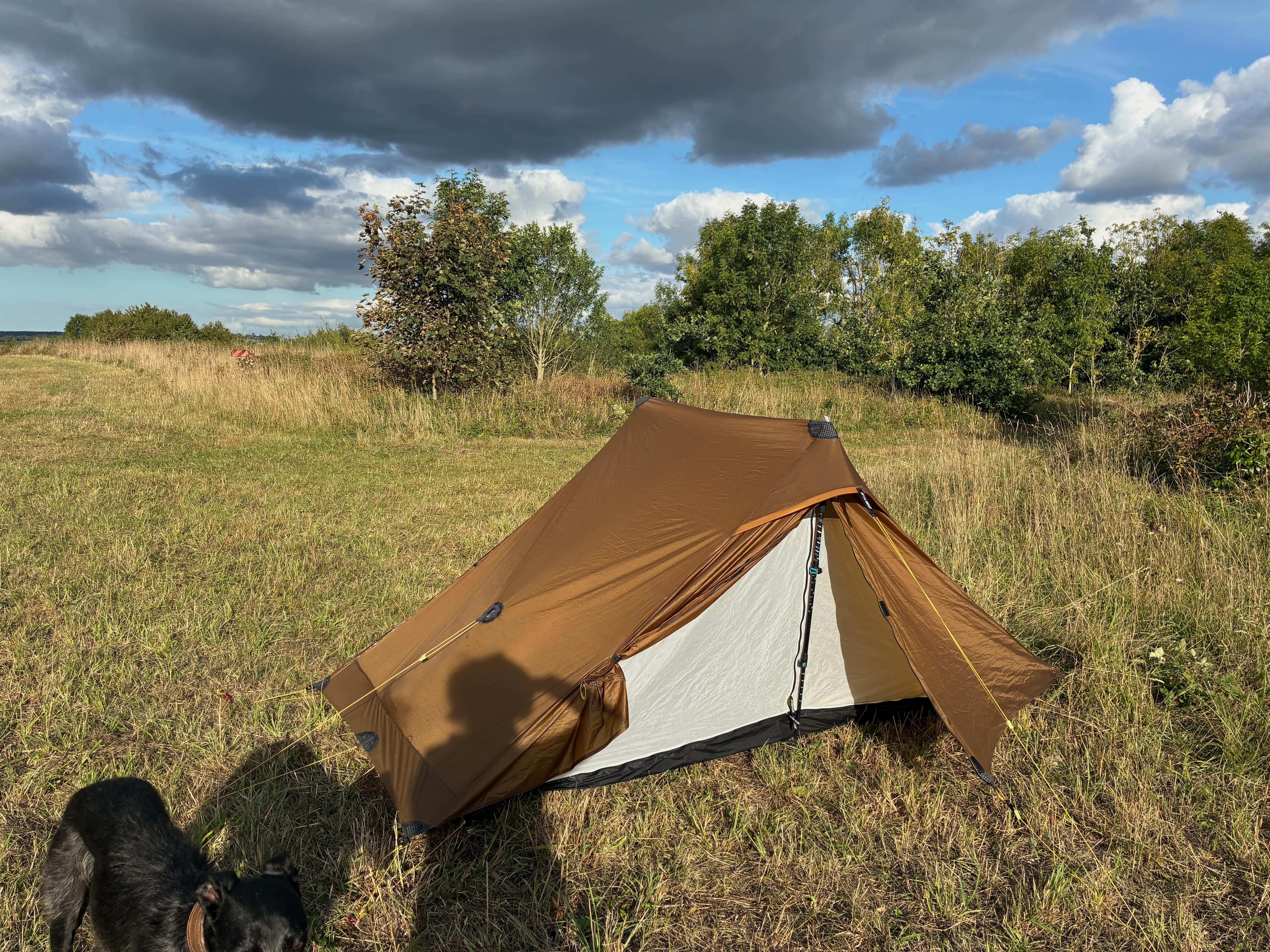
I shook off the gloom with an artisan coffee and refilled my bottles before climbing again. That evening I pitched high on the ridge, convinced I was alone, until a pair of headlights swept across my tent after midnight. Tyres crunched. My stomach dropped.
Barfleur, my home of twenty years, recently hit the news for the brutal murder of a tourist. Normally I don’t dwell on risk, but that night the fragility of camping alone felt very real. The car slowed, crawled past, and carried on. Later I checked the map and saw a house down the valley. Probably Paris weekenders. I slept eventually, though not well.
The next morning brought Suisse Normande proper, the Orne once again at my side. Here the cliffs rise steep and green hills roll away. It should have been glorious. Instead I sulked my way through, tired and grumpy from the night before. At day’s end I’d hoped to pitch on a hill with a view, but a motocross event with pounding music scuppered that plan. I gave up and took a campsite, shopped in the village, and fell into sleep.
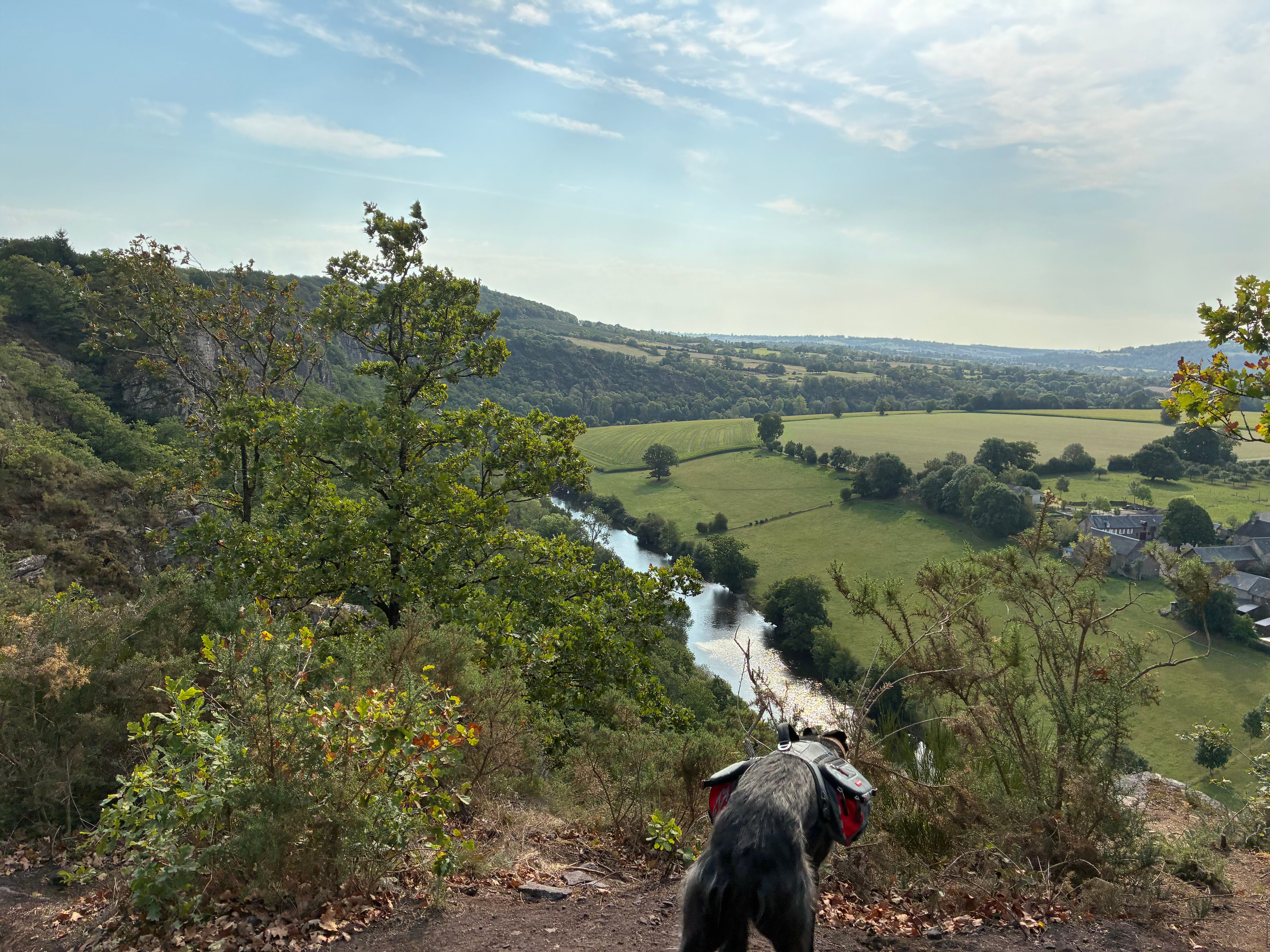
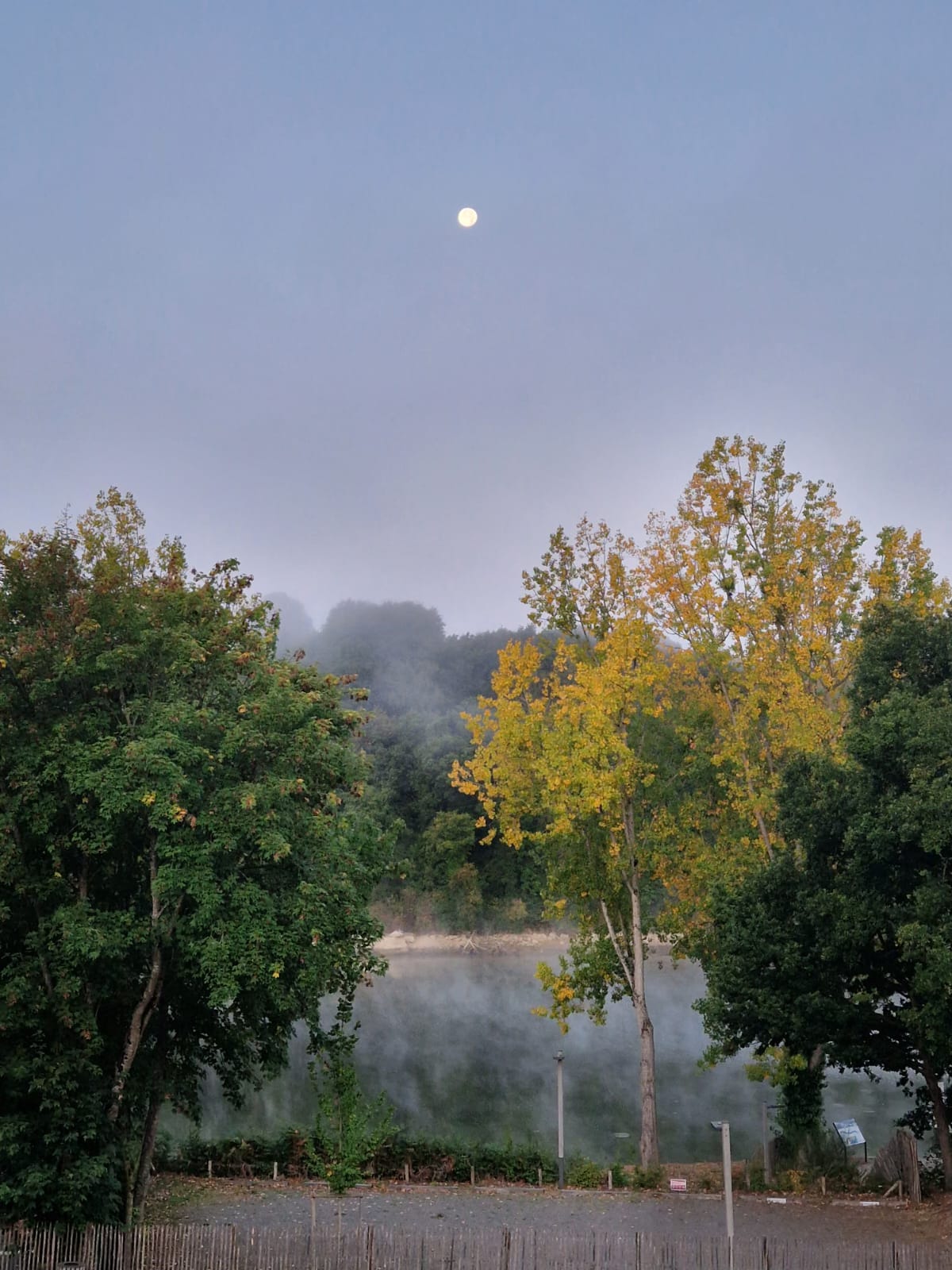
The following day restored my mood. My legs felt strong, the light was radiant, and by evening I was tucked into a bohemian little campsite by the river, blissfully content. The next morning a friend joined me and we walked nineteen kilometres together, scrumping apples and peaches as we went, before collapsing with relief into an Airbnb by the lake. That’s where I’m writing now.
And now, a confession. I’m tempted to skip the “middle third” of this walk, from Tours to the Dordogne, and do it in my campervan instead. I know that stretch. Flat fields, straight roads, the France of roundabouts and wheat silos. I can imagine writing it as a van travelogue, dipping into curiosities and landmarks, then rejoining the trail on foot around Périgueux to head for Provence. Part of me calls it a cheat. Part of me calls it common sense. This journey is teaching me to notice what matters; the small pleasures, the odd encounters, the fleeting magic. Why waste energy on the dull stretches?
What do you think? A cop-out, or just a practical edit?
A Pep Talk to Myself
Sometimes I feel guilty for maxing out at eighteen to twenty kilometres a day. But let’s be honest: that’s eleven miles, with a pack, repeated daily. Most people would be delighted to do it once.
And this is only week two. Most long-distance walkers don’t find their trail legs until week three or four. My body is still busy toughening up tendons and ligaments, all those small stabilisers you don’t notice until they hurt. If I forced longer days too soon, I’d risk breaking.
Consistency matters more than the mileage. At eighteen to twenty kilometres a day I’m covering 126 to 140 kilometres a week, five to six hundred a month. That’s not small change. That’s crossing a country. That’s walking home.
A well written and vivid description of what you are seeing and feeling. I think your daily average is very commendable, and as you say it will probably get easier. Skip the middle third ? Not sure but you may look back and regret not walking the whole distance. The boring bit might turn out to be not so boring as you come across old villages and farms etc. Maybe start it and see how you feel after 4 or 5 days ? By coincidence I'm spending this week in your new home area of the Var - some walking but mainly cycling and motorhome miles. Bonne Route !
500 - 600 km in a month is probably 500 - 600 more days of good health when you eventually reach the autumn time of life. It's an investment as well as an adventure.